
Warwickshire Policing History
Warwickshire has one of the richest and longest policing histories in the country, shaped by the people, communities and challenges that defined each era. From parish constables and borough watchmen to the formation of a professional county force, policing in Warwickshire has continually adapted to social change, new responsibilities and evolving public expectations. What has remained constant throughout is the dedication, integrity and service of the officers who protected the county.
This section explores the full story of Warwickshire policing — its beginnings, its milestones, its reforms and the many individuals who contributed to its development. Through historic records, photographs, borough force histories and accounts from retired officers, we celebrate a unique and proud heritage that continues to influence the work of Warwickshire Police today.
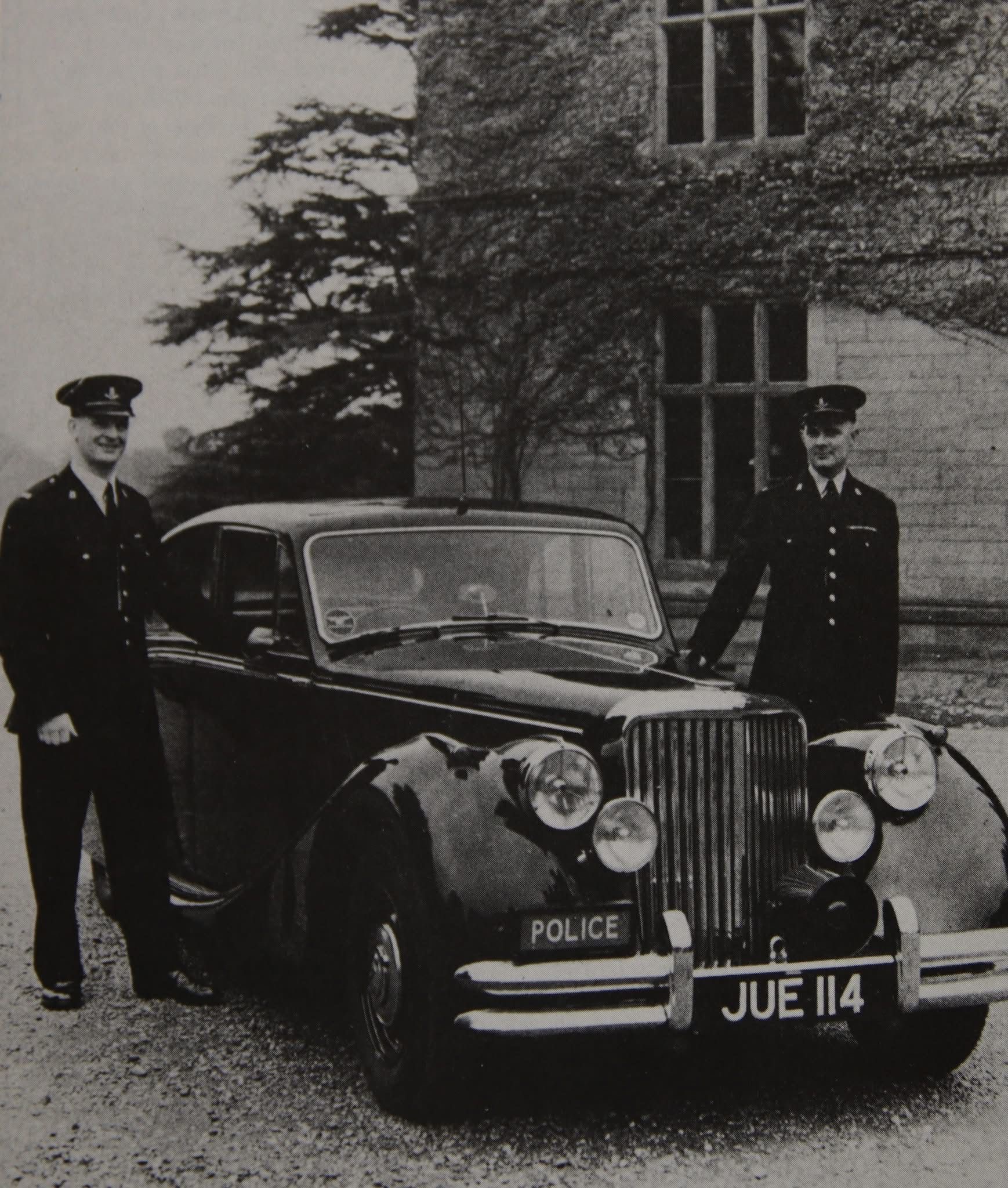
The history of policing in Warwickshire mirrors the evolution of law and order across England — from parish constables and borough watchmen to a professional county constabulary and modern-day policing. This journey reflects nearly two centuries of public service, innovation, and community commitment.
Early Policing (Pre-1840)
Before the creation of a formal constabulary, law enforcement in Warwickshire was handled by local watchmen, parish constables, and justices of the peace. Their duties were varied — from preventing theft to maintaining public order — but their reach and powers were limited.
The Industrial Revolution transformed towns like Warwick, Nuneaton, and Leamington Spa, bringing growth, migration, and new challenges. Rising crime rates and social unrest prompted calls for reform. The County Police Act of 1839 allowed justices to establish official constabularies, though Warwickshire was initially cautious in adopting the system.
Formation of Warwickshire Constabulary (1840–1900)
Warwickshire Constabulary was formally established in 1840, marking the birth of structured, county-wide policing. The new force introduced uniformed officers, patrol routes, and centralised oversight. Early headquarters were modest, but the framework of discipline, reporting, and training was set.
However, policing remained patchy — several boroughs such as Warwick, Stratford-upon-Avon, and Leamington Spa operated their own independent forces. Collaboration and consistency developed gradually through the late 19th century.
Borough Forces and Local Policing Histories
Throughout the 19th century, borough forces played an important role in local policing. Leamington Borough Police, established in 1825, was among the earliest such forces in the country. Officers patrolled on foot, carrying rattles and truncheons, with oil lamps to light their way.
Over time, it became clear that small independent forces lacked the resources and manpower to manage expanding towns. Leamington’s force eventually merged with Warwickshire Constabulary in 1947, followed by other boroughs including Warwick and Stratford.
These mergers marked the beginning of a unified approach — ensuring that every corner of Warwickshire was policed under one coordinated structure.
Mid-20th Century Changes and Growth
By the middle of the 20th century, Warwickshire Constabulary had grown into a professional organisation with trained officers, motor patrols, and modern equipment. In 1947, new headquarters were established at Woodcote House in Leek Wootton, a site that became synonymous with Warwickshire policing for decades.
The post-war years brought new responsibilities — managing increased traffic, responding to industrial disputes, and maintaining community relations during rapid social change. Women officers joined the force in greater numbers, taking on wider duties and shaping a more inclusive service.
In 1969, Warwickshire joined with Coventry City Police to form the Warwickshire and Coventry Constabulary, an attempt to streamline regional policing. However, following local government reorganisation in 1974, Coventry became part of the West Midlands Police area, and Warwickshire Constabulary reverted to its county-wide remit.
The Modern Era (2000–Present)
In 2001, the force officially adopted the name Warwickshire Police — reflecting a fresh identity for a new century. Today, the force serves a population of around 600,000 people across rural, market town, and urban areas.
Modern policing in Warwickshire encompasses far more than traditional patrol work. Officers now handle cybercrime, digital forensics, counter-terrorism, safeguarding, and community engagement — supported by advanced technology and national collaboration.
Despite significant modernisation, the ethos of service, integrity, and partnership remains unchanged from those early days in 1840.
Archives and Heritage
Warwickshire’s policing heritage is preserved through records, photographs, and artefacts held at the Warwickshire County Record Office and local history groups. These collections capture daily life from the earliest constables to the radio-equipped patrols of the late 20th century.
Historic photographs show officers managing lost property in Nuneaton and Atherstone, enforcing wartime blackouts, and attending local fairs and parades. Many retired officers have contributed to oral-history projects, helping to ensure that memories of policing in earlier decades are not lost.
In 2025, Warwickshire Police celebrated 200 years of formal policing in Leamington Spa, marking two centuries since the establishment of its borough force. The anniversary was commemorated with exhibitions and reunions, celebrating generations of service.
Leadership, Organisation and Governance
Warwickshire’s policing leadership has evolved continually. Over the decades, successive Chief Constables have introduced reforms to training, professional standards, and recruitment.
For much of the 20th century, the Warwickshire Police Authority oversaw funding and governance. In 2012, this system was replaced by an elected Police and Crime Commissioner (PCC), bringing a new model of public accountability.
Partnerships with neighbouring forces — notably the former alliance with West Mercia Police — have helped share resources and expertise while preserving Warwickshire’s distinct identity.
Technology, Training and Professionalisation
Few aspects of policing have changed as dramatically as technology. Early officers patrolled on foot or horseback; later came bicycles, motorcars, radios, and digital communications.
Training, once basic and informal, now includes evidence handling, IT systems, crisis management, and mental-health awareness. Forensic science, DNA analysis, and data management are routine parts of modern policing, ensuring Warwickshire’s officers meet national standards of professionalism.
Challenges and Change
The 21st century continues to test policing in new ways. The rise of online crime, organised networks, and global threats demands adaptability and innovation. Financial pressures have reshaped station numbers and staff structures, but community engagement remains central to Warwickshire’s policing philosophy.
Officers and volunteers alike have maintained a proud tradition of service and resilience, building trust through neighbourhood policing, schools outreach, and visible presence in towns and villages.
Commemoration and Legacy
Behind every badge lies a story — of dedication, courage, and service. The bicentenary of Leamington Borough Policein 2025 reminded the county how policing has grown hand in hand with its communities.
NARPO Warwickshire plays an important role in preserving this legacy. Through members’ recollections, photographs, and memorabilia, the association keeps alive the personal side of the county’s policing history — ensuring that the service and sacrifice of generations are remembered.
The Role of NARPO Warwickshire
For retired officers, the branch offers more than welfare and friendship — it provides continuity with a proud heritage. The experiences of members who served in borough forces, county divisions, and the modern Warwickshire Police create a living archive of service that spans more than 180 years.
By recording memories, collecting stories, and celebrating milestones, NARPO Warwickshire helps bridge the gap between the past and present — strengthening the bonds between those who served and those who continue to serve.

